







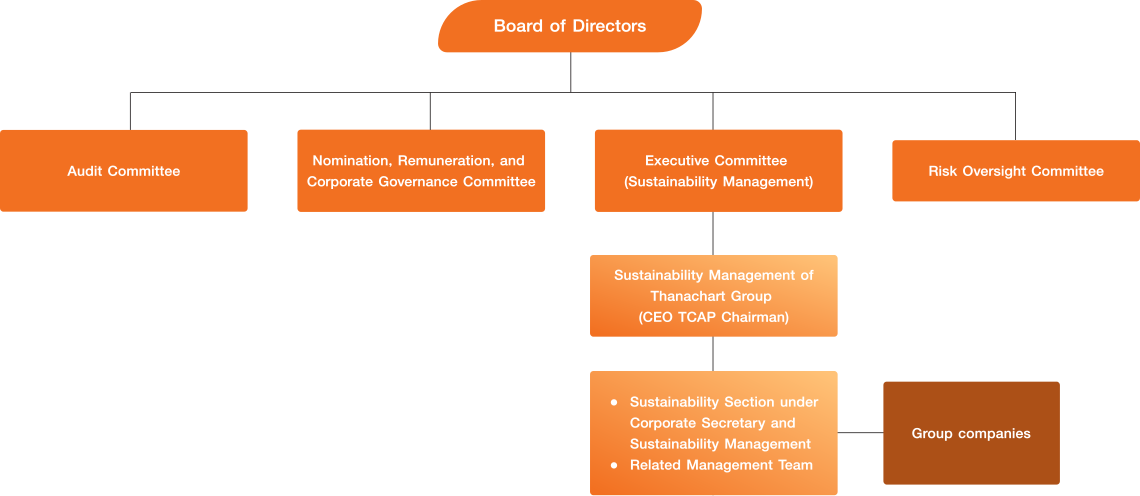
Roles and Responsibilities of Boards and
Agencies in Sustainability Implementation
| Board of Directors |
|
| Nomination, Remuneration and Corporate Governance Committee |
|
| Executive Committee |
|
| Thanachart Group’s Sustainability Management Committee |
|
| Corporate Secretary and Sustainability Management |
|
| Management concerned |
|

Thanachart Group have consistently prioritized good corporate governance, earning broad recognition for their commitment. The Company has strengthened its sustainability efforts by establishing clear operational guidelines across environmental, social and governance dimensions (ESG), ensuring well-defined action plans and measurable outcomes. In 2025, the Board of Directors prioritized the governance of sustainability-driven operations. The Board approved the review of the sustainability management policy, the human rights policy, and other related policies to align with corporate strategies, international standards, and stakeholder expectations. In this regard, the Executive Committee, acting as a standing committee, was responsible for establishing sustainability roadmaps, monitoring, and continuously overseeing operations. Furthermore, the Executive Committee resolved to approve the scope of duties for the Sustainability Management Working Group in overseeing and promoting the Company's business operations in compliance with international human rights principles and policies. This included the establishment of operational guidelines, conducting human rights risk assessments, and the review of sustainability assessments. These assessments covered the definition of sustainability objectives, stakeholder analysis, and the prioritization of key sustainability issues to integrate Environmental, Social, and Governance dimensions (ESG) into business strategy formulation. This extended to the establishment of operational guidelines that supported long-term value creation for the organization, including risk management. Additionally, the Company integrated ESG risks and climate change risks into its Enterprise Risk Management (ERM) framework with assessments of impacts on both financial performance and operations together with the establishment of appropriate mitigation measures to alleviate potential impacts and to strengthen the organization’s capacity to adapt to climate change in a sustainable manner.
In addition, Thanachart Group has established targets and guidelines for reducing greenhouse gas emissions by integrating them into operations, efficient resource utilization, and the development of products and services that support the transition toward a sustainable economy. In this regard, the Company continuously monitors and reports performance through sustainability and climate-related indicators to support the long-term greenhouse gas emission reduction target by the year 2050. This approach is aligned with Thailand’s policy toward achieving Net Zero emissions and serves as an important framework for guiding business strategy and adaptation.