




Environmental Dimension
Thanachart Group has always focused on environmental management. Over the years, there has been a policy implemented to promote practices in line with the environmental law, regulations, and requirements related to the business operations of the Group's member companies. In order to show Thanachart Group's commitment to reducing negative impact on the environment, the Group has therefore implemented measures regarding energy management, water management, refuse, waste and pollution management, as well as greenhouse gas management. In addition, the Group encourages an organizational culture that cultivates environmental consciousness, and also continues to operate in areas related to environmental conservation.
Financed Greenhouse Gas Emissions
Thanachart Group recognizes the continuously increasing demand for energy arising from the growth of the industrial sector, the economy, and population expansion, which may lead to future energy supply risks and have adverse impacts on the environment, climate change, and global warming. These challenges contribute to pollution, natural disasters, and long‑term effects on quality of life. In this regard, all relevant sectors have collaborated to implement measures to mitigate such impacts and to promote efficient energy use in parallel with sustainable environmental conservation.
As a corporate group playing a key role in supporting the nation’s economic development, Thanachart Group places strong emphasis on responsibility in the use of resources and energy, as well as environmental conservation. The Group conducts its business alongside continuous social and environmental responsibility initiatives and has established clear policies to promote efficient energy use, including tangible energy conservation measures within office buildings. Environmental and energy management has been integrated into operational processes, together with the promotion of employee participation at all levels, based on the belief that collective organizational cooperation will generate positive outcomes for energy conservation and environmental protection at the national level, leading to sustainable development.
The Company has become a member of the Thailand Carbon Neutral Network (TCNN), an initiative under the supervision of the Thailand Greenhouse Gas Management Organization (Public Organization) (TGO), reflecting its commitment to contributing to Thailand’s greenhouse gas reduction efforts and supporting the transition to a low-carbon economy. The Company integrates climate-related risks and opportunities into its business operations and decision-making processes, reinforcing its pursuit of carbon neutrality and sustainable long-term growth.
In 2025, Thanachart Group implemented activities to promote environmental engagement by encouraging executives and employees to recognize the importance of efficient resource utilization. These initiatives encompassed energy reduction, prudent use of resources, and waste management in accordance with the 3R principles-Reduce, Reuse, and Recycle-through projects that can be applied in daily life. Such efforts aim to reduce resource consumption and greenhouse gas emissions, thereby supporting sustainable environmental management over the long term.
Example Goals and Action Plans to Reduce Environmental Impacts of Thanachart Group
Activities to Promote Thanachart Group’s Conservation of Energy and Resources In 2025, Thanachart Group implemented the following projects:

Promote participation in environmental protection
Project Organizing Company: Thanachart Group
Project Objective: To reduce and control the impact of the Group's business operations on the environment
Project Details:
Electricity
- Purchase energy-saving electrical appliances to replace damaged electrical appliances
- Establish a regular maintenance plan for air-conditioning systems and ventilation systems.
- Replace indoor lighting with 270 round LED bulbs to improve electrical energy efficiency in office areas.
- Designate the employee who is directly in charge of supervising the use of electrical appliances
- Regular maintenance and monitoring of the operation of electrical appliances
- Raise awareness about cutting consumption of energy and various forms of waste materials to reduce global warming.
- Apply stickers to encourage employees to conserve electricity.
- Promote awareness of how to save electricity and use resources efficiently
Water Consumption
- Campaign for economizing on water and turn the tap off after use.
- Campaign to ban dumping of food waste, toilet paper or anything else in the toilet bowl.
- Raise awareness about reducing water usage to reduce global warming.
- Apply stickers to encourage employees to conserve electricity.
- Promote awareness of how to save water and use resources efficiently
Waste management and pollution control
- Waste reduction based on the 3R concept (Reduce, Reuse, Recycle) as a guideline for efficient and effective resource utilization, focusing on reducing unnecessary resource consumption, reusing materials, and properly segregating waste for recycling and reuse in the production process.
- Install grease traps on every sink to capture and separate grease before discharging wastewater into public water sources.
- Promote reducing the use of photocopiers to encourage environmentally friendly practices.
Paper Usage
- Conduct a survey on paper usage across all departments to raise awareness about each department’s paper consumption and to provide guidelines for reducing their paper usage.
- Campaign for reuse of used paper
- Choose printers and photocopiers with a 2-page printing feature
- Develop working system based on electronic transaction processing
- Promote awareness of how to save paper and use resources efficiently, such as sharing of documents through Electronic messenger, E-Document, E-Approval, OneDrive, Public Folder, and Workflow Automation. This helps reduce reliance on hard copies or traditional paper-based services, leading to decreased paper and stationery consumption, as well as reduced dependence on messenger services.
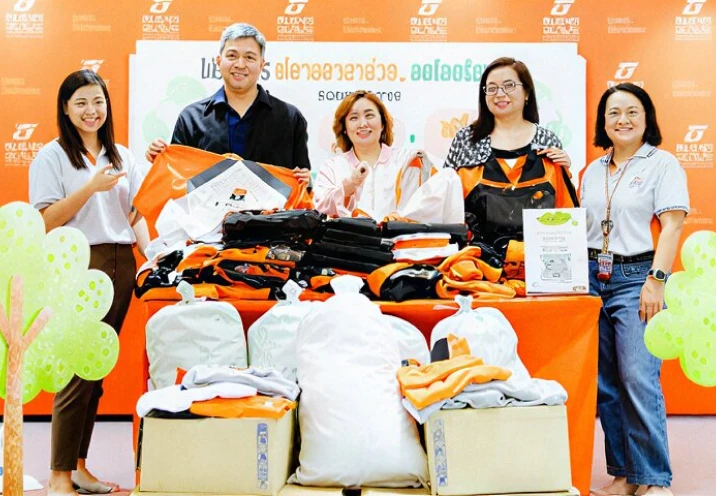
Thanachart Volunteers’ Project to Reduce Global Warming
Project Organizing Company: TNI
Project Objective: Emphasis is placed on supporting initiatives aligned with the Company's Environmental, Social, and Governance (ESG) policy to raise awareness in society about the value-conscious use of resources and inspire environmental driving force for a sustainable future. Employees are encouraged to participate in these activities to contribute to a better world. Recognize that environmental issues are not distant possibilities. Each individual can take action and achieve tangible results. Be prepared to drive sustainability initiatives from the corporate level to a global scale in the future.
Project Details:
- In 2025, employees collected and submitted used uniforms for proper management and environmentally responsible handling.
- Additional collections are planned for 2026, with the uniforms to be forwarded to recycled fabric and sustainable textile producers for conversion into renewable raw materials. This initiative aims to reduce textile waste, alleviate pressure on waste management systems, and promote efficient and sustainable use of resources over the long term.

Project in Collaboration with the Stock Exchange of Thailand (SET)
The Company has continuously participated in the SET’s Climate Care Collaboration Platform project (“Three Green Allies: Positive Power to Tackle Global Warming”). This project forms part of the organization’s environmental management framework, with a focus on fostering environmental awareness among employees at all levels, supporting behavioral change in resource consumption, and promoting low‑carbon operations. These efforts align with Thanachart Group’s long-term greenhouse gas reduction objectives.
In 2025, Thanachart Group continued its resource management and waste and disposal management efforts as follows:

Resource management was carried out through participation in the paper reduction initiative of Thailand Securities Depository (TSD), which focuses on transitioning from paper-based documents to electronic (paperless) systems. As a result of this initiative, total greenhouse gas emissions were reduced by 93.15 tCO2e.

Waste and disposal management (recyclable waste) was carried out through campaigns and initiatives encouraging employee participation in proper waste segregation prior to disposal at designated collection points. The recyclable materials collected were forwarded to environmental initiatives run by partner organizations, including the GC YOUTURN project for plastic bottles, the Green Roof project for the Friends in Need (of “PA”) Volunteers Foundation for milk cartons, and the collection of used calendars to support the Educational Technology Center for the Blind. As a result of these activities, total greenhouse gas emissions were reduced by 0.07 tCO2e.
As a result, these initiatives achieved a total reduction of 93.21 tons of carbon dioxide equivalent (tCO2e), which is equivalent to the annual carbon dioxide (CO2) absorption of approximately 9,812 trees. This reflects Thanachart Group’s continued commitment to conducting business responsibly while consistently caring for the environment.
Environmental Performance
(The data scope covers TCAP TNI THANI)
| Key Performance Indicators | 2023 | 2024 | 2025 |
|---|---|---|---|
| Electricity Consumption | |||
| Electricity Consumption (kWh) | 1,445,938 | 1,529,941 | 1,453,556 |
| Increase/Decrease of Electricity Consumption (Percent) | - | 5.81 | 0.53 |
| Electricity Consumption per Employee (kWh per Person) | 958 | 992 | 951 |
| Increase/Decrease in Electricity Consumption per Employees (Percent) | - | 3.55 | (0.66) |
| Electricity Expenses (Baht) | 8,573,573 | 8,437,512 | 8,097,224 |
| Increase/Decrease in Electricity Expenses (Percent) | - | (1.59) | (5.56) |
| Water Consumption | |||
| Water Consumption (Cubic Meters) | 11,457 | 13,117 | 12,287 |
| Increase/Decrease of Water Consumption (Percent) | - | 14.49 | 7.24 |
| Water Consumption per Employee (Cubic Meters per Person) | 8.36 | 9.34 | 8.80 |
| Increase/Decrease of Water Consumption per Employees (Percent) | - | 11.64 | 5.25 |
| Water Use Expenses (Baht) | 265,533 | 310,990 | 302,596 |
| Increase/Decrease of Water use Expenses (Percent) | - | 17.12 | 13.96 |
| Non-hazardous waste (paper) | |||
| Paper Consumption (Reams) | 22,698 | 22,180 | 21,033 |
| Increase/Decrease of Paper Usage (percent) | - | (2.28) | (7.34) |
| Paper Purchase Expenses (Baht) | 771,374 | 796,241 | 753,359 |
| Increase/Decrease of Paper Purchase Expenses (percent) | - | 3.22 | (2.34) |
Notes:
- The increase/decrease rates are compared against the base year 2023 (the base year was changed from 2022 due to changes in key operating subsidiaries and the expansion of office space within the Group). The data scope covers 1) the Company, 2) THANI, and 3) TNI.
- The increase in water and electricity consumption is attributable to the expansion of office space within the Group.
- Greenhouse gas emissions under Scope 2 represent indirect emissions from electricity consumption within the organization, while Scope 3 emissions represent indirect emissions from water and paper consumption. The calculation of greenhouse gas emissions (Carbon Footprint) is based on the methodology of the Thailand Greenhouse Gas Management Organization (Public Organization).
- The Company is currently studying and collecting data to enable the disclosure of greenhouse gas emissions under Scope 1.
Projects and Activities Related to Environmental Conservation by Thanachart Group
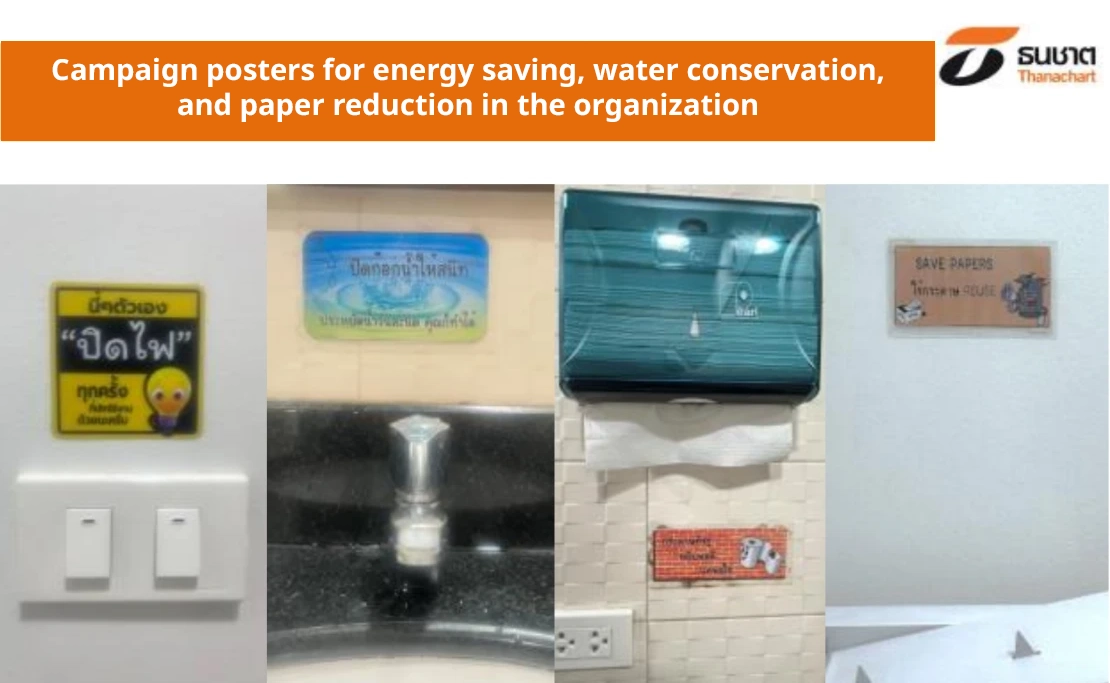
The project involved installing awareness signage promoting energy, water, and paper towel conservation, along with placing reminders at light switches to encourage employees to turn lights on and off appropriately and to shut off water taps after use. The campaign continuously encouraged employee participation in saving energy and resources.
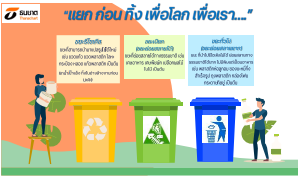
Thanachart Group places strong emphasis on internal waste management to establish effective management standards and reduce environmental impacts. Separate waste bins have been installed throughout the organization, along with campaigns encouraging all employees to participate in waste reduction and proper waste segregation. Waste is categorized into recyclable waste, general waste, and organic waste, and must be correctly separated prior to disposal to facilitate appropriate treatment or further utilization.
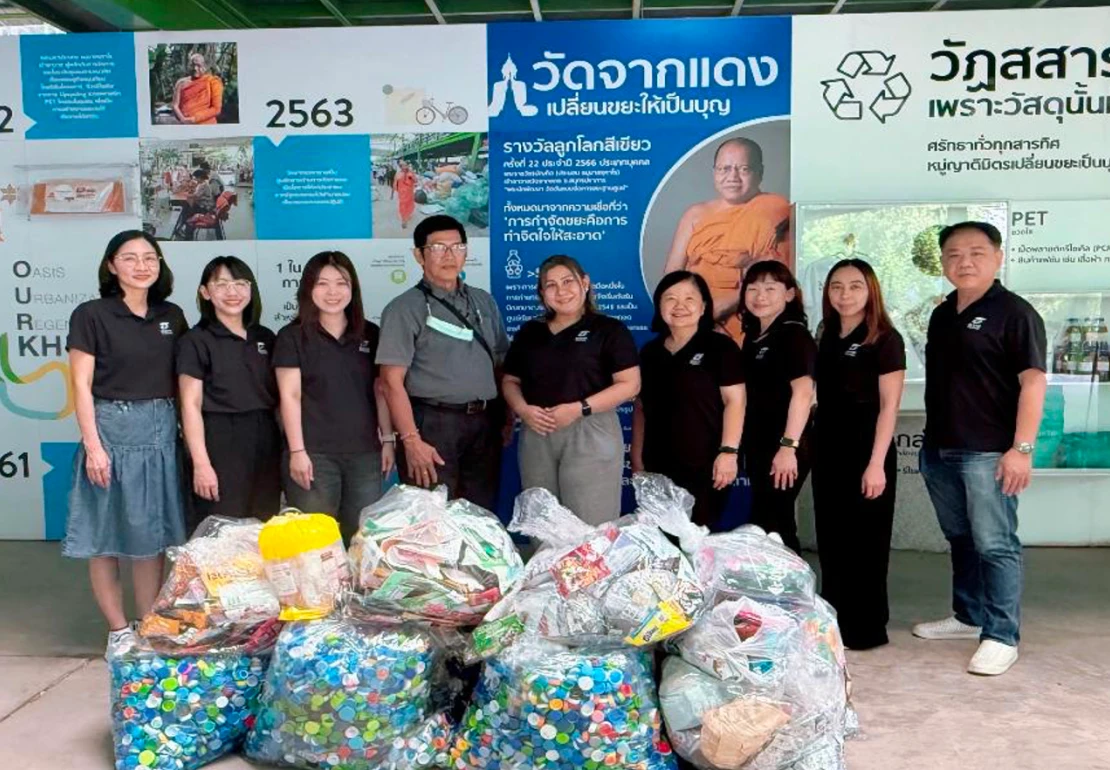
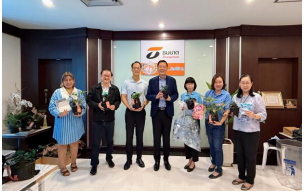
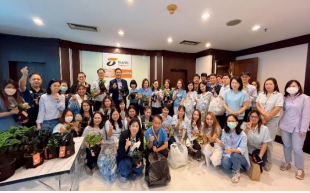
Thanachart Group organized the “Recycle for Trees for Mom” project in celebration of National Mother’s Day 2025. Mr. Perapart Meksingvee, Managing Director, presented air‑purifying plants to all executives and employees to encourage participation, strengthen family relationships, and promote responsible resource use, material recycling, and the expansion of green spaces through tree planting. The recyclable materials collected were forwarded to Wat Chak Daeng and the GC YOUTURN project, creating shared social and environmental value in a sustainable manner.
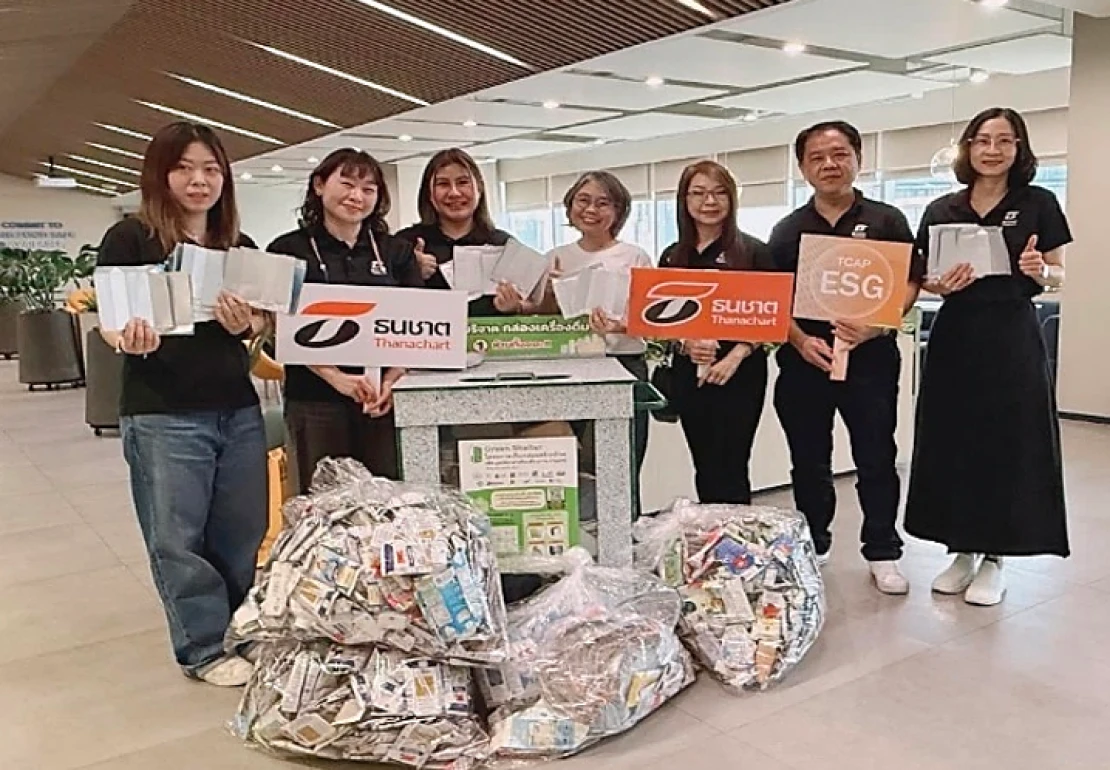
Thanachart Group continued its “Collect Boxes, Build Homes” initiative for the third consecutive year, encouraging employees to gather used cartons for recycling under the “Turn Used Beverage Cartons into Roof Sheets” program. The collected cartons were delivered to Tetrapak (Thailand) Co., Ltd. for recycling into roofing materials. This initiative supports the Group’s ESG commitments by promoting awareness of recycling, efficient resource utilization, and sustainable waste reduction through active employee participation.
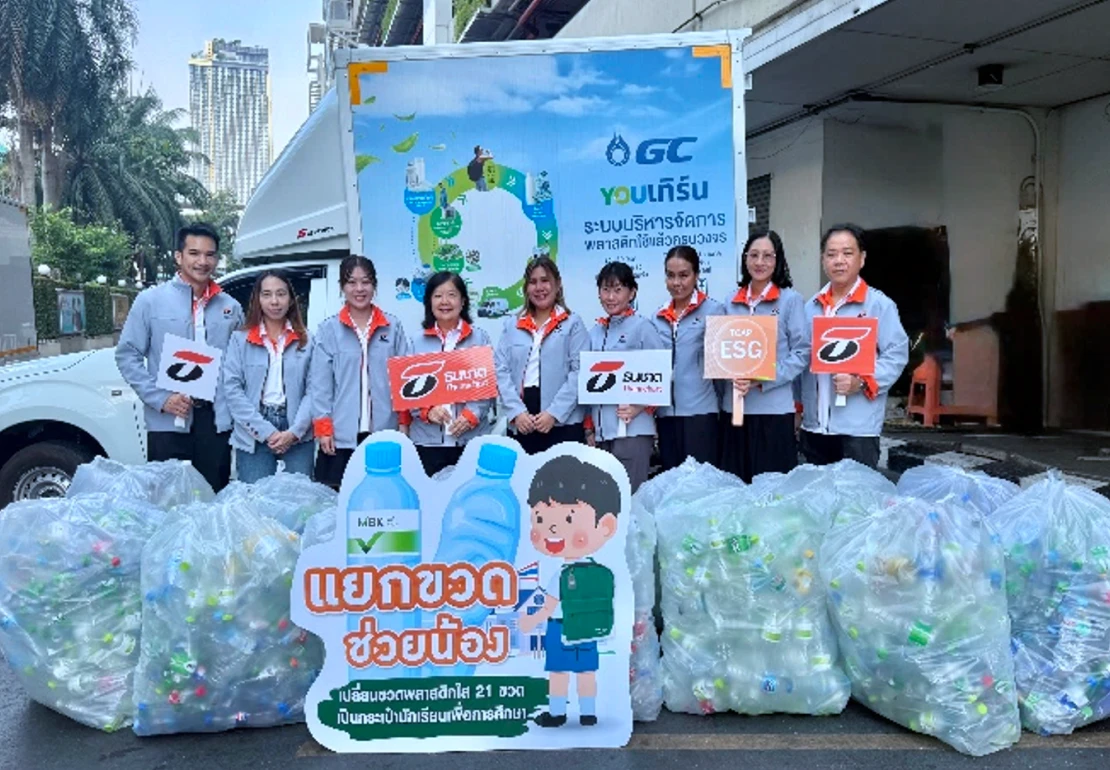
Thanachart Group places strong emphasis on internal waste management to reduce environmental impact and establish systematic practices. The Group has implemented the Sort–Clean–Flatten–Drop waste segregation initiative for bottles, glass, and plastic, with employees actively participating in proper sorting prior to disposal. Recyclables are forwarded to GC YOUTURN under the “Separate Bottles to Help Kids” activity, where 21 clear plastic bottles can be converted into a student backpack.
Thanachart Group has continued its “Old Calendars, New Value” initiative by donating used calendars to the Educational Technology Center for the Blind for conversion into Braille learning materials. In addition, the Group contributed 50,000 baht to support education and enhance the quality of life of persons with visual impairments in a sustainable manner. This initiative reflects Thanachart Group’s commitment to efficient resource utilization and the continuous creation of social value.
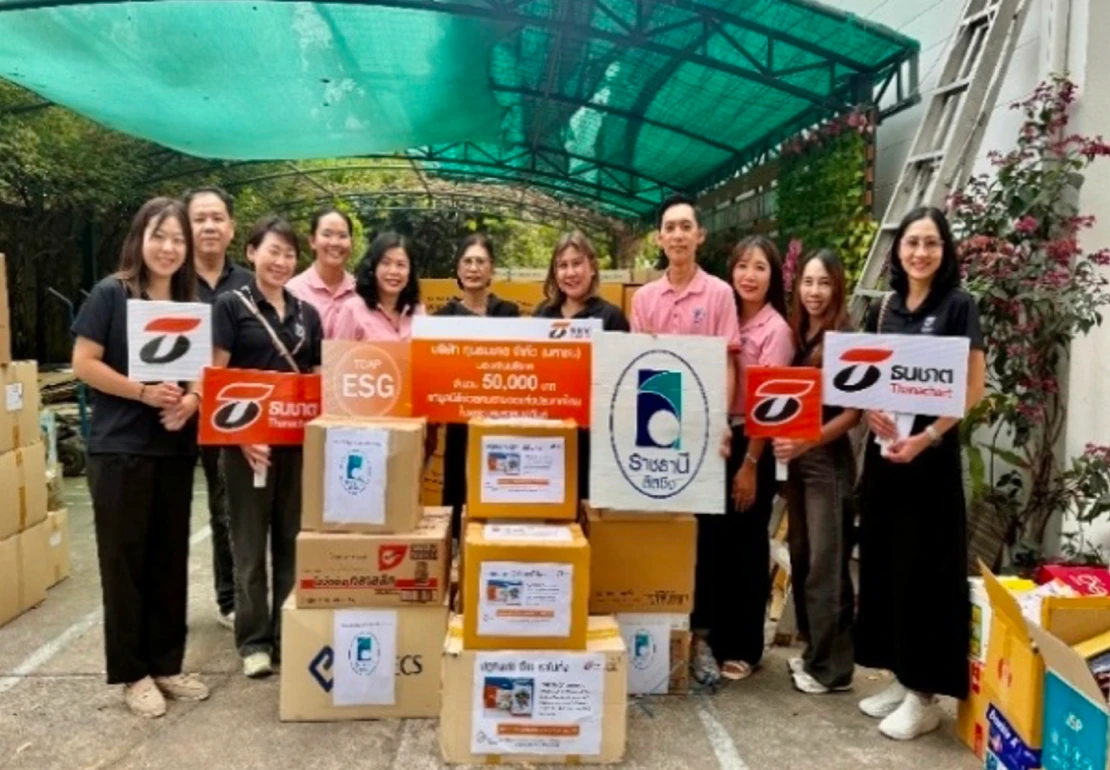
Thanachart Group implemented the “Bottle Caps…Reduce Global Warming” and “Plastic Bags…Recyclable” initiatives, encouraging employees to participate in sorting recyclable waste such as bottle caps and plastic bags. The collected materials are delivered to the Wat Chak Daeng Environmental Learning Center in Samut Prakan Province for recycling into new products and energy. These initiatives help reduce landfill waste, generate income for communities, and promote awareness of efficient resource utilization.