

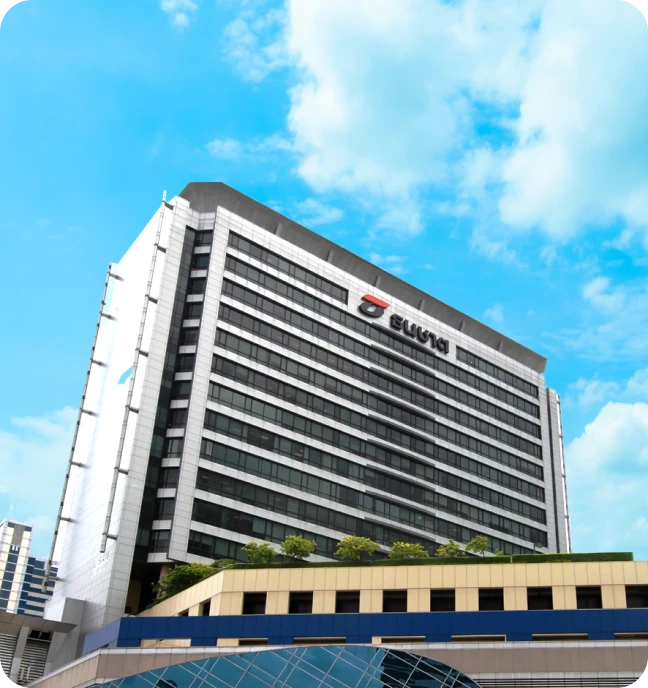





Managing the impact on stakeholders
in the value chain of business
The Value Chain of Business
The Company’s business operations have both direct and indirect impacts on its stakeholders. In order to create opportunities and mitigate potential impacts arising from its business activities, the Company has conducted an analysis of its value chain in alignment with its role as an investment holding company. This approach emphasizes the development of strong and constructive relationships with stakeholders, while continuously caring for society and the environment, with the objective of enhancing the well being of all stakeholder groups and fostering sustainable shared growth.
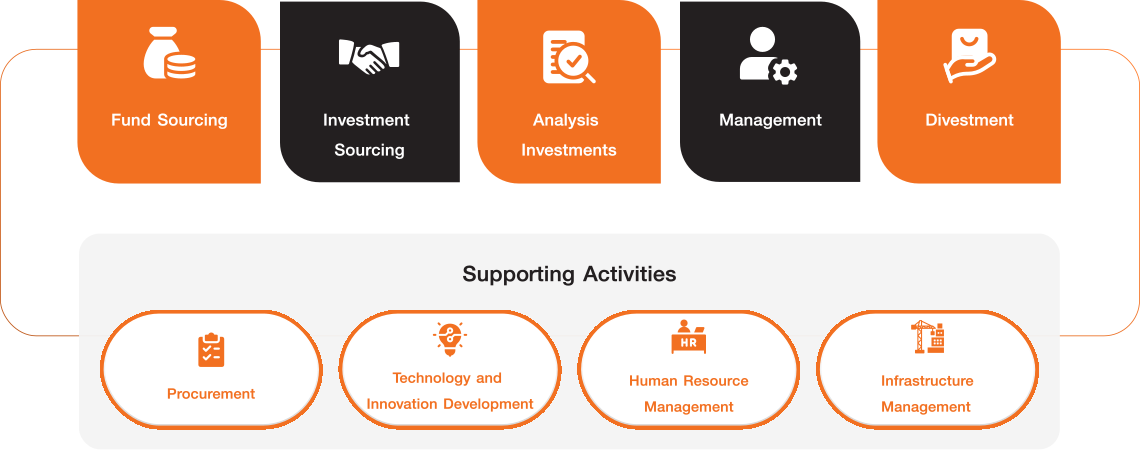
Supporting activities to help drive business to
achieve maximum efficiency are as follows:
01
Procurement
Conducting procurement in alignment with the established policies, ensuring transparency, and cost-effectiveness. This includes procurement for supporting the procurement of modern equipment, and office supplies to facilitate operations, enhance efficiency, and support effective work performance.
02
Technology and Innovation Development
Utilizing technology and innovation to support operations, enhance efficiency, and provide more convenience for customers, while establishing a sustainable and secure technological ecosystem to drive long-term growth.
03
Human Resource Management
Developing the potential and skills of personnel, while promoting an organizational culture rooted in ethics, social responsibility, and equitable practices.
04
Infrastructure Management
Establishing a corporate governance structure, risk management systems, and internal control systems that comply with relevant laws and regulations to ensure transparent operations, good corporate governance, and to build confidence among stakeholders.

Ranking material
sustainability issues
The Company identifies key material sustainability issues by focusing on those that impact operations, financial performance, and stakeholders. This includes relevant risks and opportunities, supported by data and analysis to support informed decision-making. These issues are prioritized by their significance and are reviewed on a continuous basis to ensure effective organizational management and strategy formulation. Furthermore, the assessment encompasses Environmental, Social, and Governance dimensions. This integration empowers the Company to operate sustainably and create value for the organization, its stakeholders, and society at large.
The process of assessing major sustainability issues
has 4 steps as follows:
Identifying of Material Sustainability Issues
01
The Company considers and identifies material sustainability issues relevant to its operations by benchmarking against industry contexts and sustainability trends at both national and international levels. These issues cover Environmental, Social, and Governance dimensions (ESG). The identified issues are then presented to senior management for review and approval to finalize the selection of key material sustainability issues.
Prioritization of Material Sustainability Issues
02
The Company assesses the importance of each issue by analyzing its impact on the organization and its stakeholders. This process incorporates insights gained from both internal and external stakeholder engagement to effectively prioritize material sustainability issues.
Validation of Material Sustainability Issues
03
Senior management and relevant departments jointly validate the data and establish operational guidelines to address material sustainability issues and stakeholder expectations. These findings are subsequently presented to the Sustainability Management Committee for review and to the Executive Committee for approval, before being disclosed in the annual report.
Review of Material Sustainability Issues
04
Material sustainability issues are regularly reviewed through stakeholder engagement and business context monitoring. This ensures that the Company’s sustainability initiatives remain relevant, adaptable to change, and effective in meeting stakeholder expectations.
Material Sustainability Issues
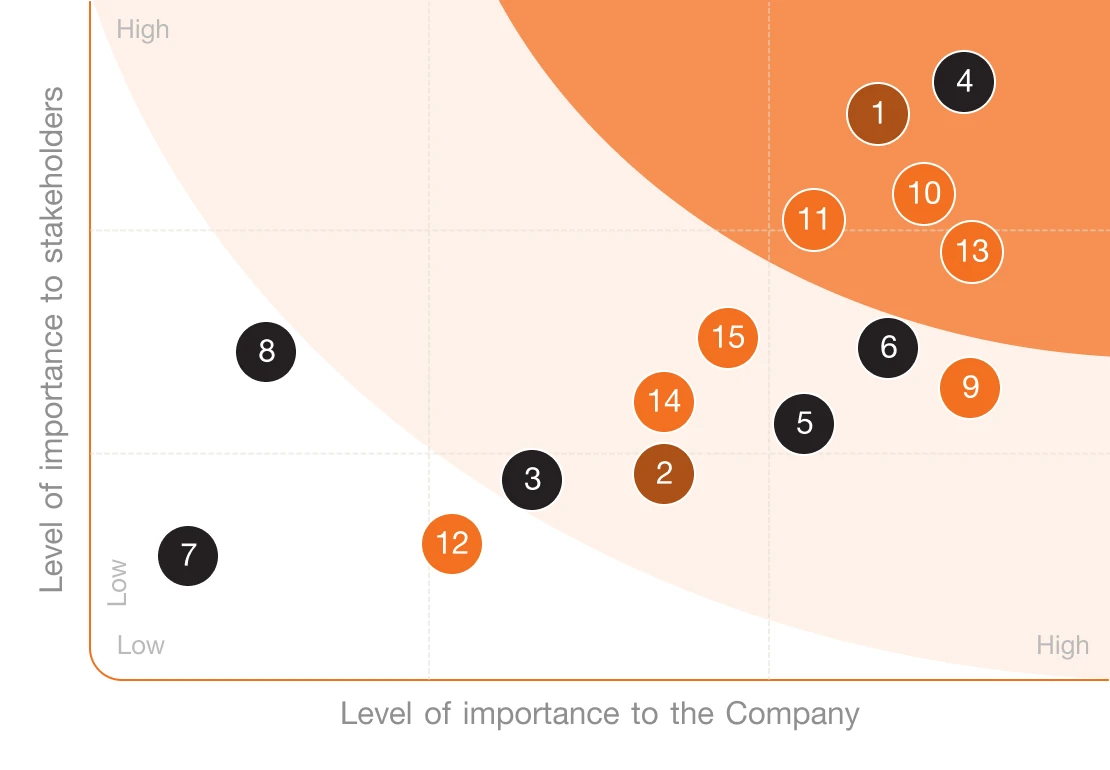
In 2025, a review of material sustainability issues (Materiality Review) was conducted, taking into account the business context, sustainability risks and opportunities, and the feedback and expectations of key stakeholders. The results led to the refinement of certain issues from 2024 to ensure alignment with Thanachart Group’s strategic priorities. Furthermore, sustainability operations continued according to plan, with ongoing improvements to ensure measures remain appropriate to the context and stakeholder needs. Consequently, a total of 15 material sustainability issues were identified.
| Environmental Dimension | Social Dimension | Governance Dimension |
|---|---|---|
|
|
|